Category: Reflections

  • One Week Later: The Power of Stepping Back

    When I came home from college, I found a stack of my old artwork shoved into the back of a drawer. I pulled them out, expecting to feel a little nostalgic, but instead, I was mostly horrified. The drawings looked stiff, awkward, even unrecognizable from what I had originally imagined. I caught myself thinking, How did I ever think this was good?

    And honestly, that feeling stuck with me for a bit. It’s humbling to realize how your standards change over time. But it’s also kind of incredible. Because that discomfort, that cringe, is proof that I’ve grown.

    That growth doesn’t always take years either. Sometimes, it only takes a week.

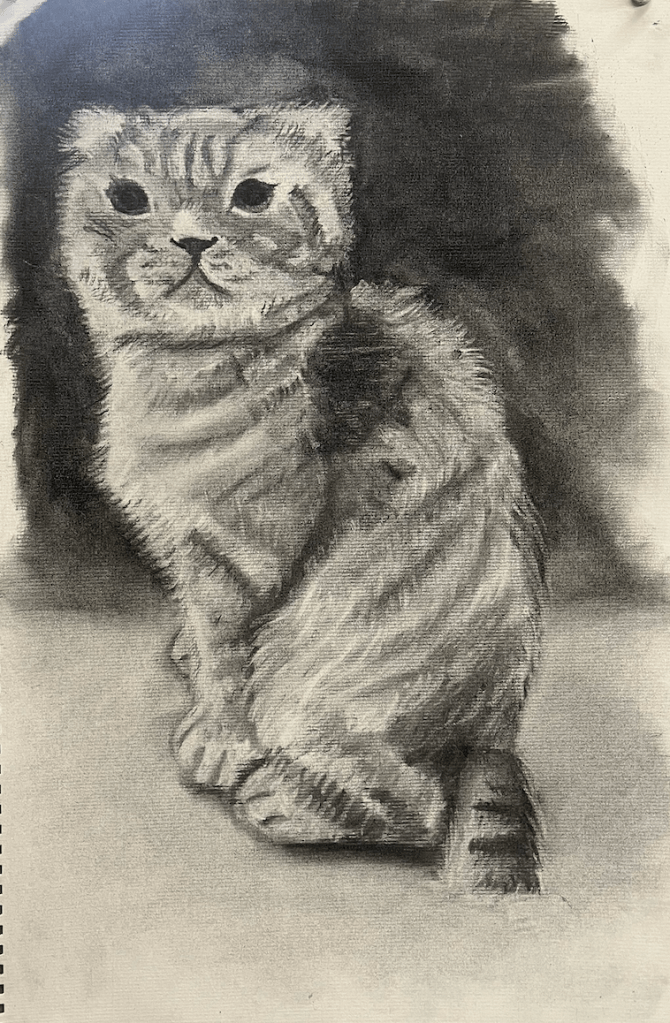
    One of the clearest examples of that happened recently. I had been working on a charcoal drawing of a cat in class. I remember being so frustrated during the first session. No matter how hard I tried, the proportions were off, the expression looked flat, and I couldn’t get the fur texture right. I left that class feeling pretty defeated. I didn’t even want to look at the drawing again.

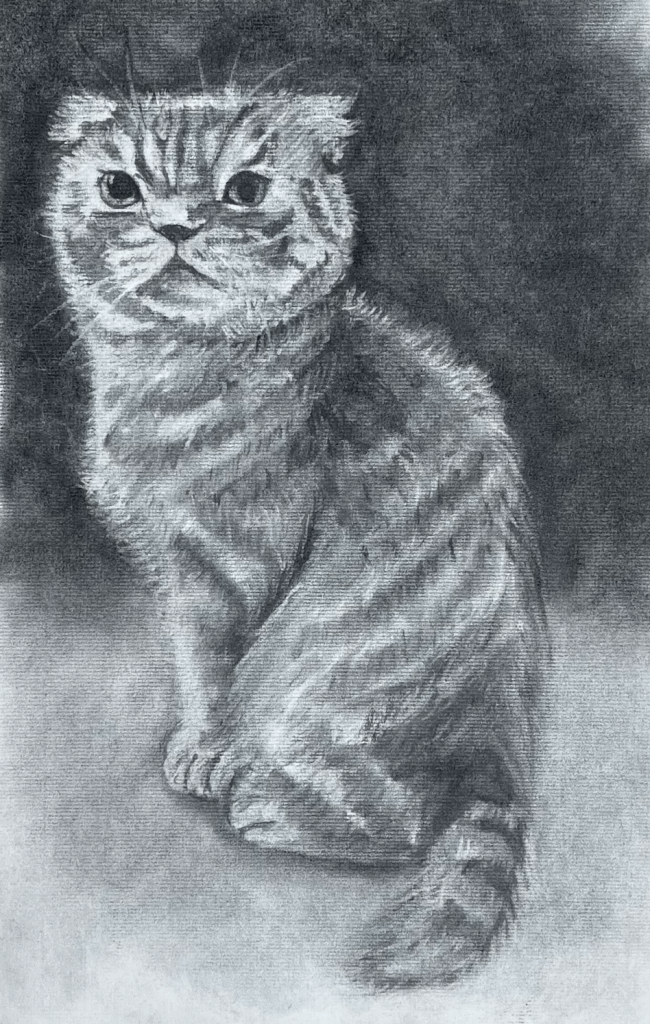
    But a week later, we returned to the same piece. I hadn’t practiced more, I hadn’t switched tools, I just gave myself time to step away. When I sat back down with fresh eyes, everything looked different. I saw what needed adjusting. I paid closer attention to the shadows. I softened the edges, deepened the contrast, and slowly, the drawing came to life in a way it hadn’t before.

    The difference between the two versions, just seven days apart, is something I’m still thinking about.

    It made me realize that sometimes it’s not about skill. It’s about space.

    We’re so used to pushing through discomfort and trying to make something good in one sitting. But taking breaks, real intentional ones, can be part of the creative process too. Rest gives us the distance to return with a new perspective. And sometimes, all it takes is a little space to see your work, and yourself, more clearly.

    Looking at the two drawings side by side, I still see imperfections. But I also see growth. I see what happens when I trust myself enough to pause. I see proof that things really can get better, even when they start off rough. Especially when they start off rough.

    So now, when I catch myself hating something I’ve made, I try to be a little more patient. I don’t rush to tear it up or abandon it completely. I remind myself that I might just need a break, and that it’s okay to return later, when I’m ready to see it again.

    Sometimes, growth looks like a new sketchbook. Sometimes, it looks like a total rework. But sometimes it just looks like one week of rest.
  • Lessons from a Needle and Thread

    What the Guilford Mask Project taught me – about care, creativity, and how to keep showing up.

    Start small. Start anyway.

    The first masks were made from fabric I had at home. Scraps from past projects, bits of elastic I found in an old drawer. I wasn’t thinking about impact. I just knew someone needed a mask.

    That’s the thing about urgency. It doesn’t wait for confidence. It taught me that starting small isn’t a flaw. It’s a strength. Scale comes later. What matters first is showing up when it counts, even when you’re not sure how far you’ll go.

    Care is a verb.

    It’s one thing to say you care. It’s another to spend hours ironing seams and triple-checking fit because you want someone to feel safe.

    Care isn’t abstract. It’s action. It’s sending a box to a refugee camp you’ll never see. It’s researching speech-friendly mask designs at 1 a.m. because a teacher asked for help. It’s choosing softness, showing up consistently, and following through.

    Most of the time, the people you’re helping won’t know your name. But they’ll know someone cared. And that’s enough.

    You don’t need permission to make something useful.

    I didn’t work in healthcare. I wasn’t trained in public health or logistics. But I had time, a sewing machine, and a reason to act.

    So I figured it out. Pattern by pattern, call by call, one donation at a time. That experience taught me this: waiting for approval can be a barrier to progress. Impact doesn’t need a title. It just needs someone willing to act.

    Design is not decoration. It is empathy in motion.

    We began by focusing on what people needed most—not how things looked, but how they worked. Why were ear loops hurting? Why did some kids refuse to wear their masks? What did comfort look like in a hospital waiting room?

    The best designs weren’t flashy. They were thoughtful.
    Filter pockets. Adjustable ties. Clear windows.

    Real design isn’t about making something pretty. It’s about making something matter.

    Ask questions. Change things. Do it again.

    The original designs didn’t always work. Some masks were too big. Some ties came loose. One clinic needed waterproof fabric we hadn’t used before.

    Instead of getting discouraged, I learned to get curious.
    What went wrong? What could we do better?

    Design, like service, is iterative. You’re not supposed to get it right the first time. You’re supposed to care enough to keep improving.

    You don’t do this alone. Even when it feels like you are.

    There were nights I was the only one sewing, packaging, answering emails. It felt isolating at times. But this wasn’t a solo story.

    Ten volunteers joined. Friends shared materials. Organizations opened their doors. We became a web, interconnected by a common goal.

    That’s what I learned. Movements aren’t always loud. Sometimes they’re quiet, people in different places, using different tools, all working toward the same goal. And that’s enough.

    Flexibility makes things last.

    We started with masks. Then came scrub caps. Then chemo caps. Then reusable menstrual kits. The more we listened, the more needs surfaced, and the more we adapted.

    We created solutions for speech therapy programs, rural health clinics, and shelters serving displaced families. Each request taught me to let go of rigid plans and instead ask, What do you need?

    That openness to shift, to listen, to try again is what kept the project going. It’s what keeps everything going.

    Give it structure. But don’t force it to be perfect.

    At one point I tried to organize the project like a company. Tracking hours, managing volunteers, streamlining requests. It helped. But it also reminded me this wasn’t about optimization. It was about care.

    Some things can’t be templated. Some actions are meant to be a little messy. What mattered most was staying grounded in our mission, not in how polished it looked but in how personal it felt.

    The best projects don’t end. They evolve.

    The PPE crisis eventually slowed. But the needs didn’t.
    We still get requests for menstrual kits. Teachers still ask for extra masks.

    The Guilford Mask Project taught me that a project doesn’t need to be trending to be important. It doesn’t need a relaunch or a spotlight to stay alive.

    If the mission still matters, you find new ways to carry it forward, even if it looks different now.

    And finally, you are allowed to care deeply.

    In a world that moves fast and rewards output, this project reminded me that quiet care is its own kind of power.

    Every stitch, every conversation, every late-night redesign was rooted in something simple and human. The belief that people deserve to be protected, to be thought of, to be remembered.

    We didn’t just make masks.

    We made care visible.